
A Practical Guide to Rotary Files in Endodontics
Understanding heat-treated NiTi metallurgy, glide path management, cyclic fatigue resistance, and torque protocols to prevent instrument separation.
Hanudent Clinical Editorial Team
Endodontic & Materials Research Group
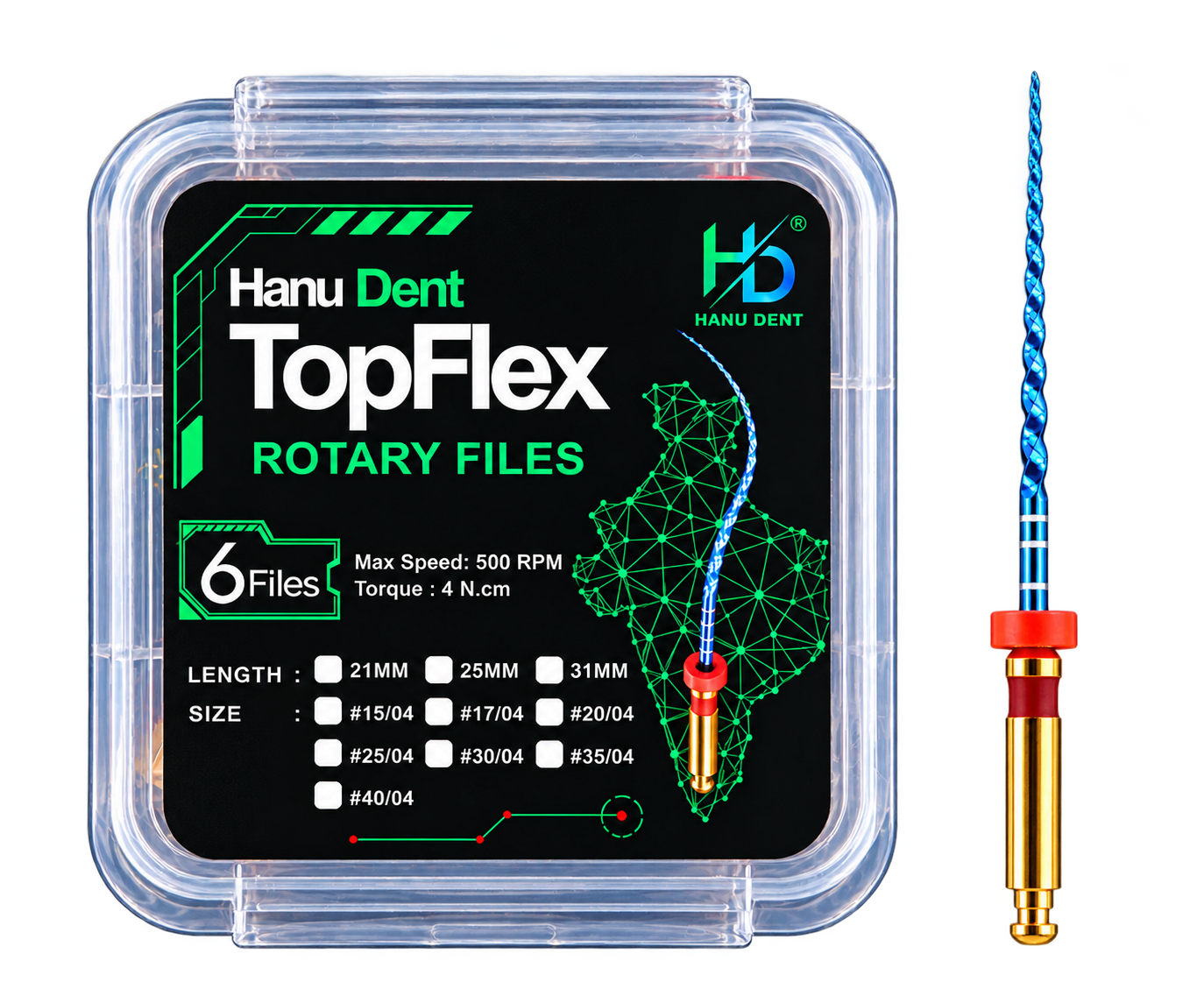
Table of Contents
Endodontic instrumentation has undergone a transformative revolution since the introduction of engine-driven Nickel-Titanium files. For clinicians striving to achieve predictable canal enlargement without canal transportation, zipping, or file separation, mastering rotary file mechanics is essential.
1. The Evolution of NiTi Metallurgy
Traditional NiTi files operated in the austenitic phase at room and mouth temperatures, making them springy and prone to returning to their straight original form. While flexible, they exerted restoring forces against the outer canal wall in curved roots, creating canal transportation.
Modern proprietary thermal treatments—such as those used in Hanu Dent TopFlex and Blue Rotary systems—shift the transformation temperature. This produces files with a predominant martensitic phase at oral temperatures, offering exceptional flexibility, zero restoring spring-back, and dramatic resistance to cyclic fatigue.
2. Glide Path: The Essential Prerequisite
No rotary file should ever be forced into an un-negotiated canal. Clinical evidence consistently shows that establishing a reproducible glide path from orifice to apical constriction is the most effective safeguard against file fracture.
Clinicians should first scout with small stainless steel hand files (such as Hanu Dent C+ or K Files in sizes 08# and 10#) to confirm patency. Subsequently, dedicated mechanized NiTi Path Files (sizes 13#, 16#, 19# at 02 taper) can create a smooth, calibrated corridor that allows larger shaping rotary files to proceed with minimal torsional resistance.
3. Torsional Stress vs. Cyclic Fatigue
Instrument separation occurs primarily through two distinct mechanisms: torsional overload and cyclic fatigue.
**Torsional stress** occurs when the tip of the file binds within narrow dentinal walls while the handpiece motor continues rotating. This causes shear failure near the tip.
**Cyclic fatigue** occurs when a file rotates in a curved canal, subjecting the metal flutes to alternating cycles of tension and compression until micro-fissures propagate into complete fracture.
Using thermal-treated files with controlled memory significantly prolongs cyclic fatigue life, particularly in middle and apical curvatures where severe radius angles exist.
4. Operating Speeds and Torque Settings
Always adhere strictly to manufacturer-calibrated electric motor settings. For Hanu Dent TopFlex and Blue Rotary Files, maintain 400 - 450 RPM with torque limited to 4.0 N·cm. For Path Files, reduce motor speed to 300 - 350 RPM with torque set to 3.0 N·cm.
Using excessive speed or torque overrides the tactile warning signals of binding and substantially elevates the probability of rapid file separation.
Request Clinical Samples & Quotes for Your Practice
Discuss your operatory needs directly with Hanudent's product team. Fast WhatsApp assistance and factory-direct pricing.
Products Featured in this Article
Featured400-450 RPM / 4 N·cmTopFlex Rotary Files
Flex Beyond Limits — Advanced Thermal NiTi Precision
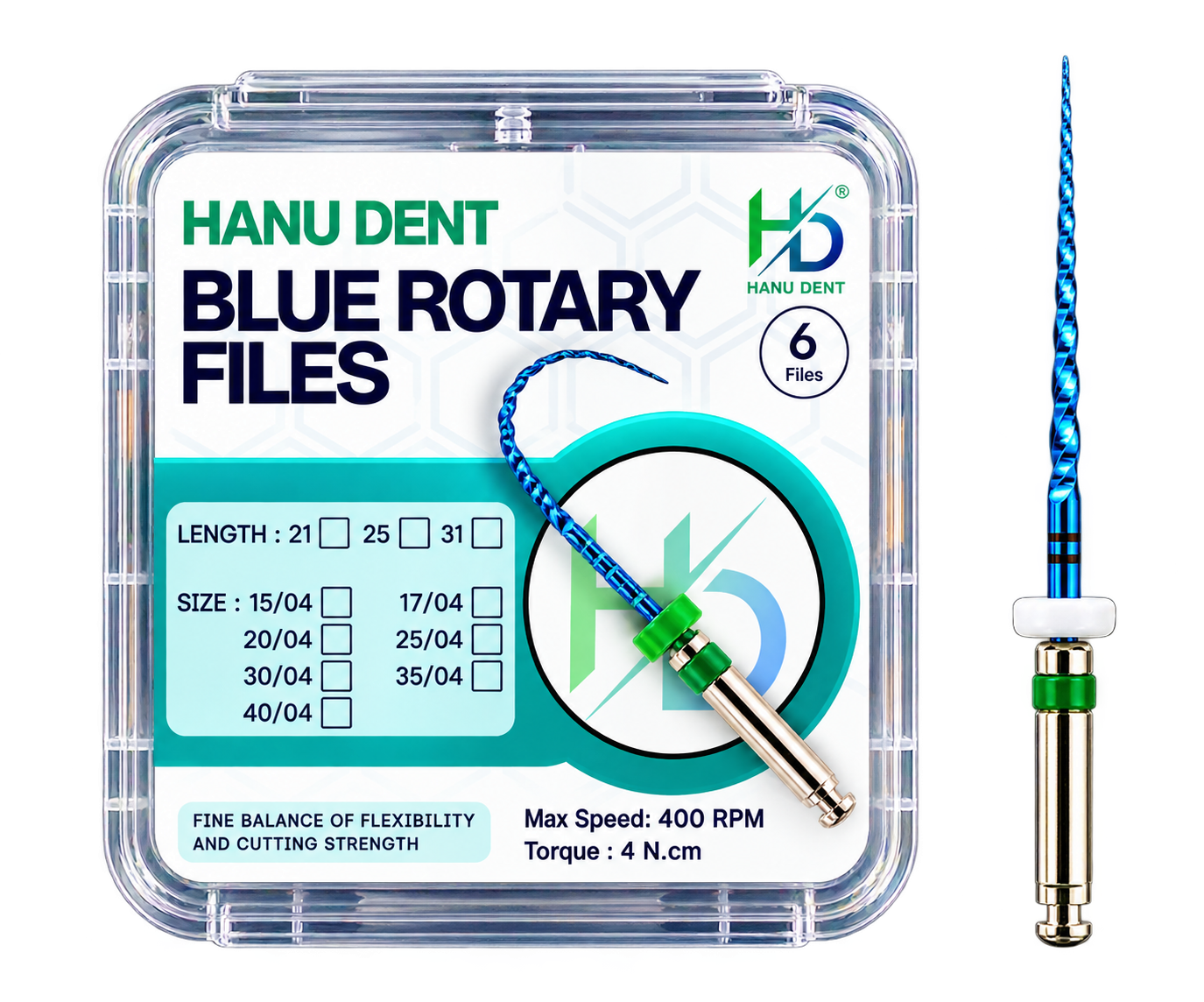 Featured400-450 RPM / 4 N·cm
 Featured300-350 RPM / 3 N·cm300-350 RPM / 1.5-3 N·cm
Retreatment Rotary Files
Systematic Gutta-Percha Removal & Canal De-obturation
Continue Reading
How to Choose the Right Dental Instruments for Your Practice
A practical clinical guide on evaluating material metallurgy, ergonomics, tactile sensitivity, and sterilization compatibility when selecting dental instruments.
Dental Product Quality: What Clinics Should Consider Before Buying
Key indicators for evaluating dental product provenance, raw material standards, manufacturing precision, and vendor reliability.